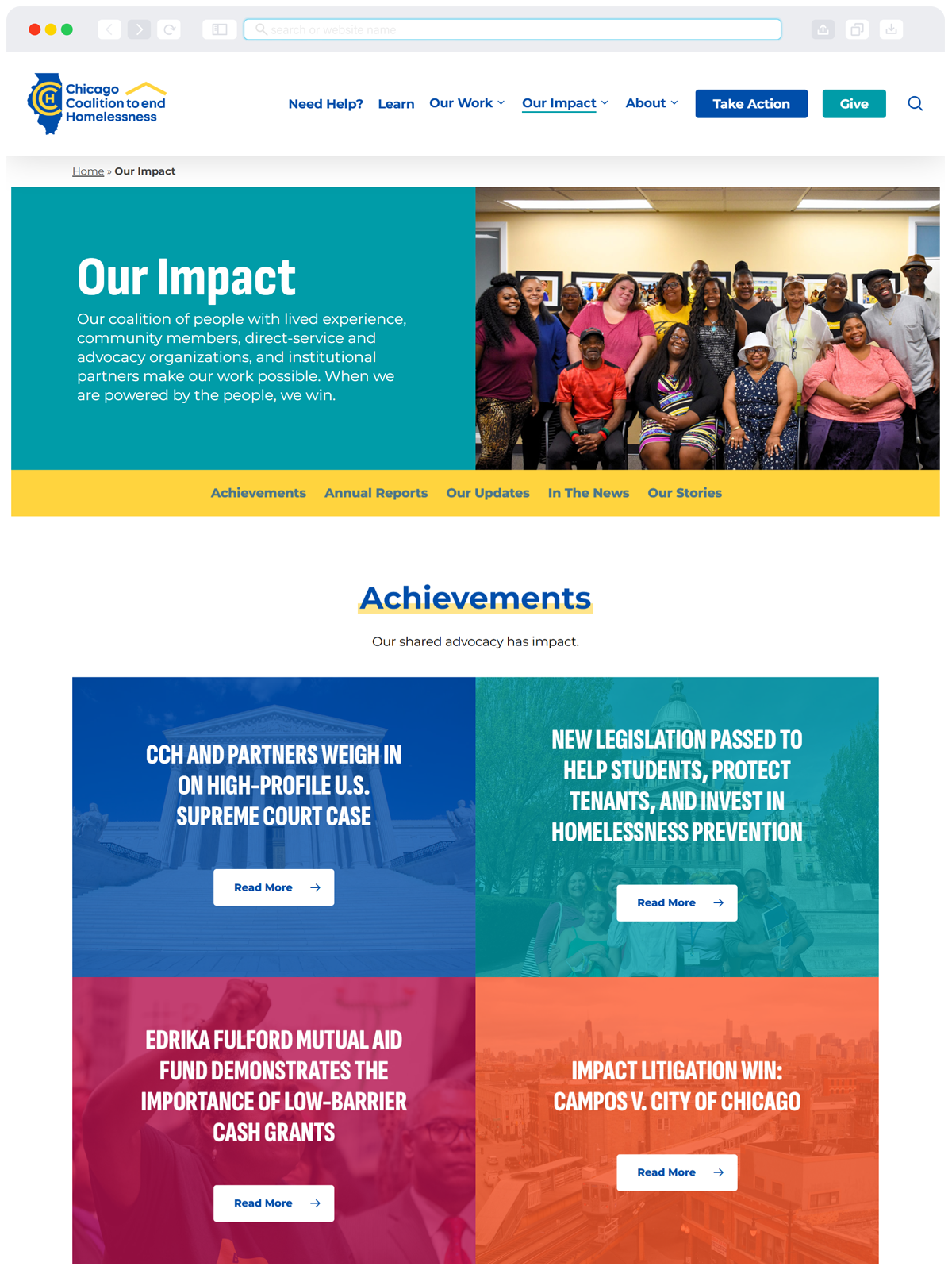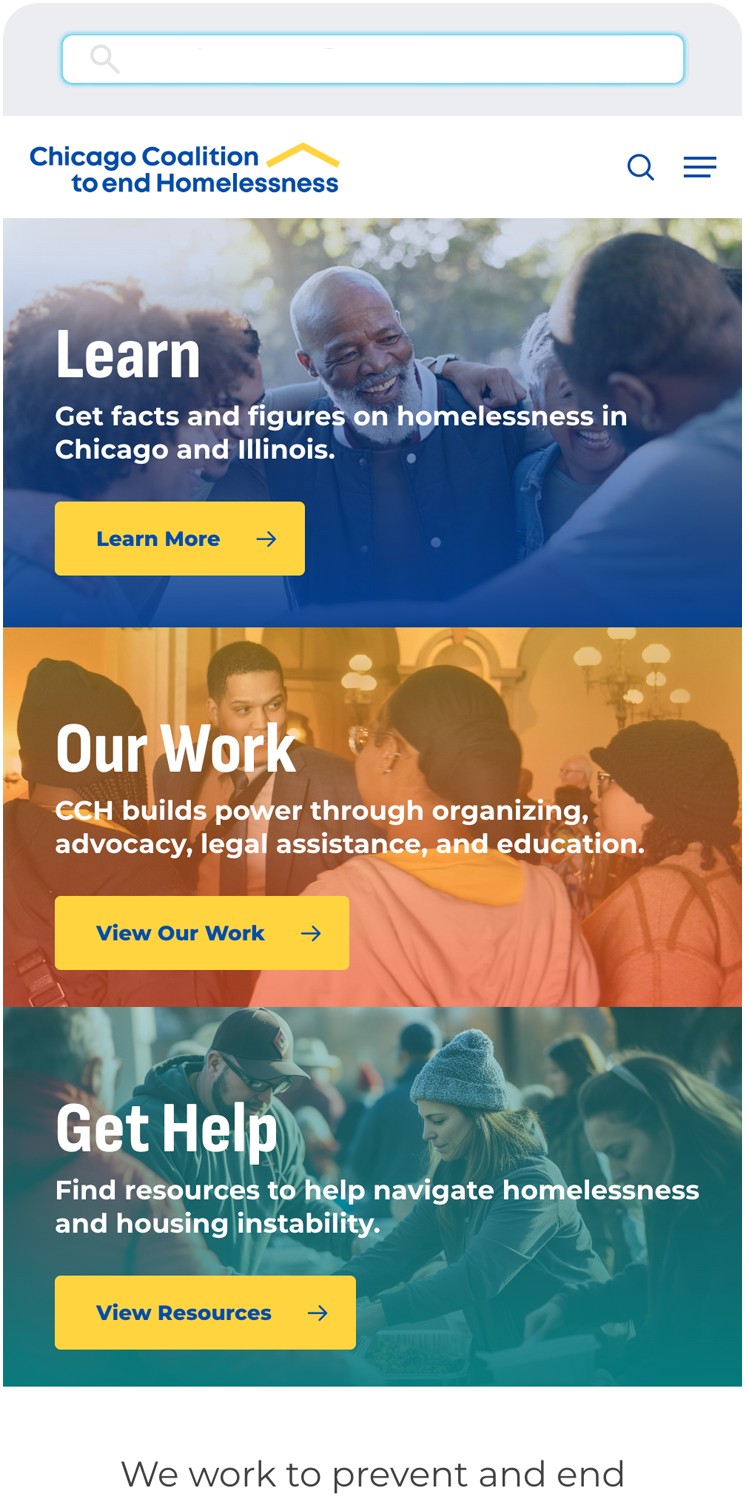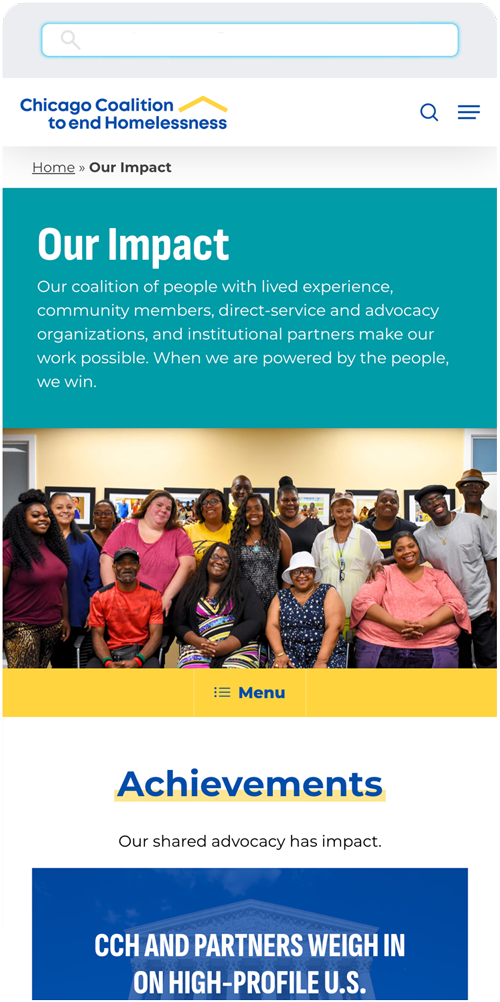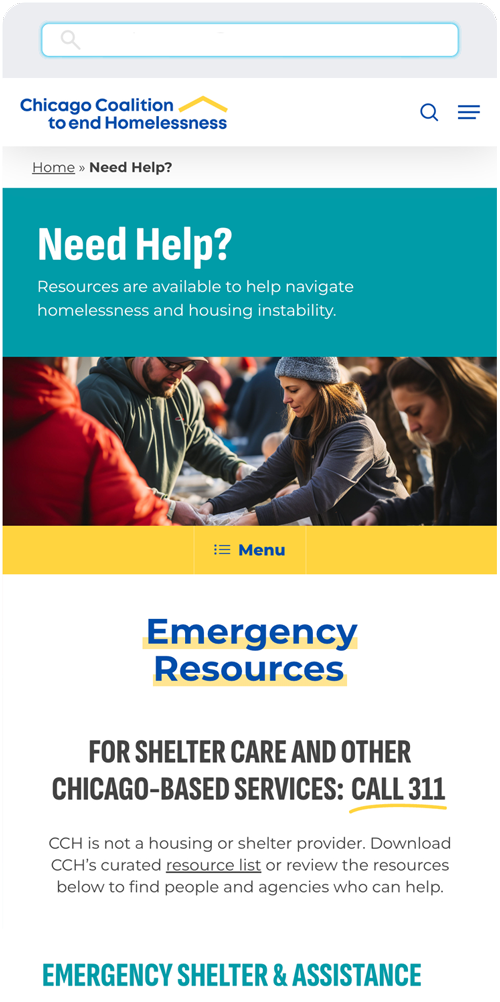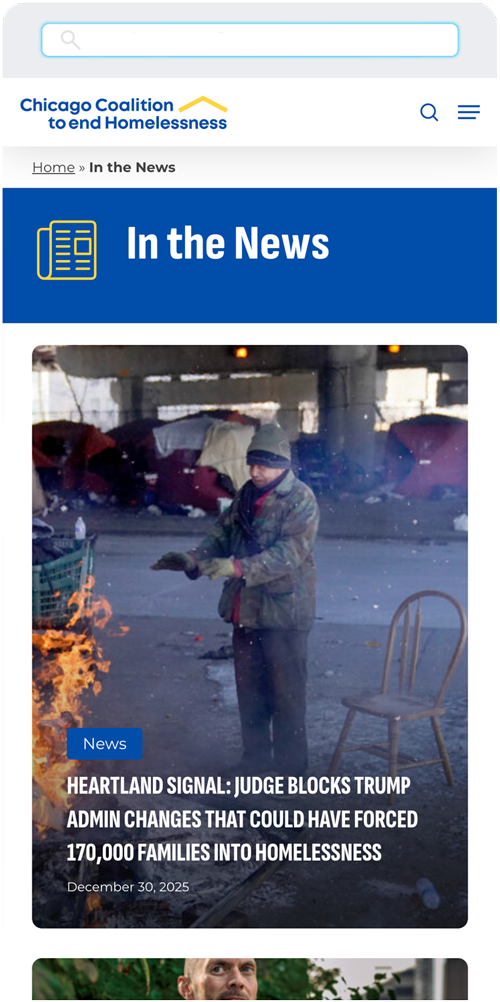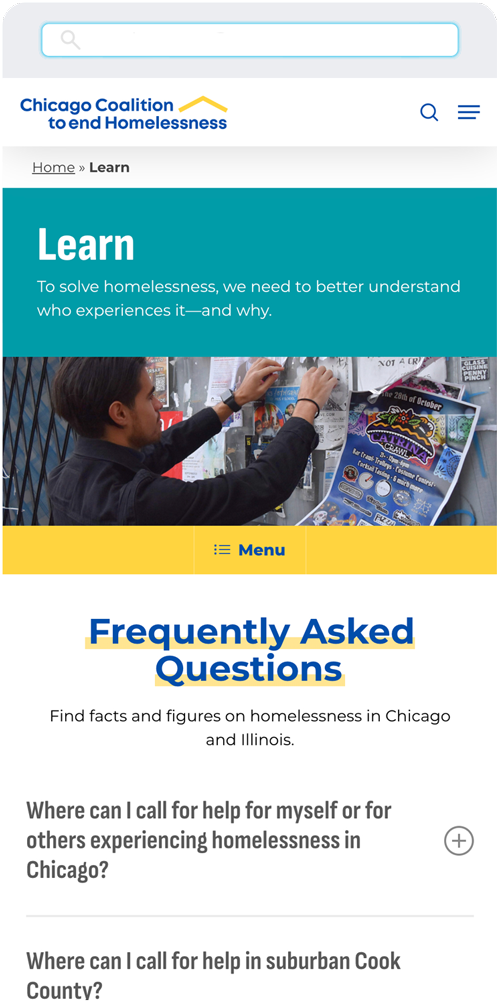

CCH Rebrand and Website Development
UX/UI Design · Project Management
Leading a strategic transformation of brand and digital experience to support advocacy, education, and public action.
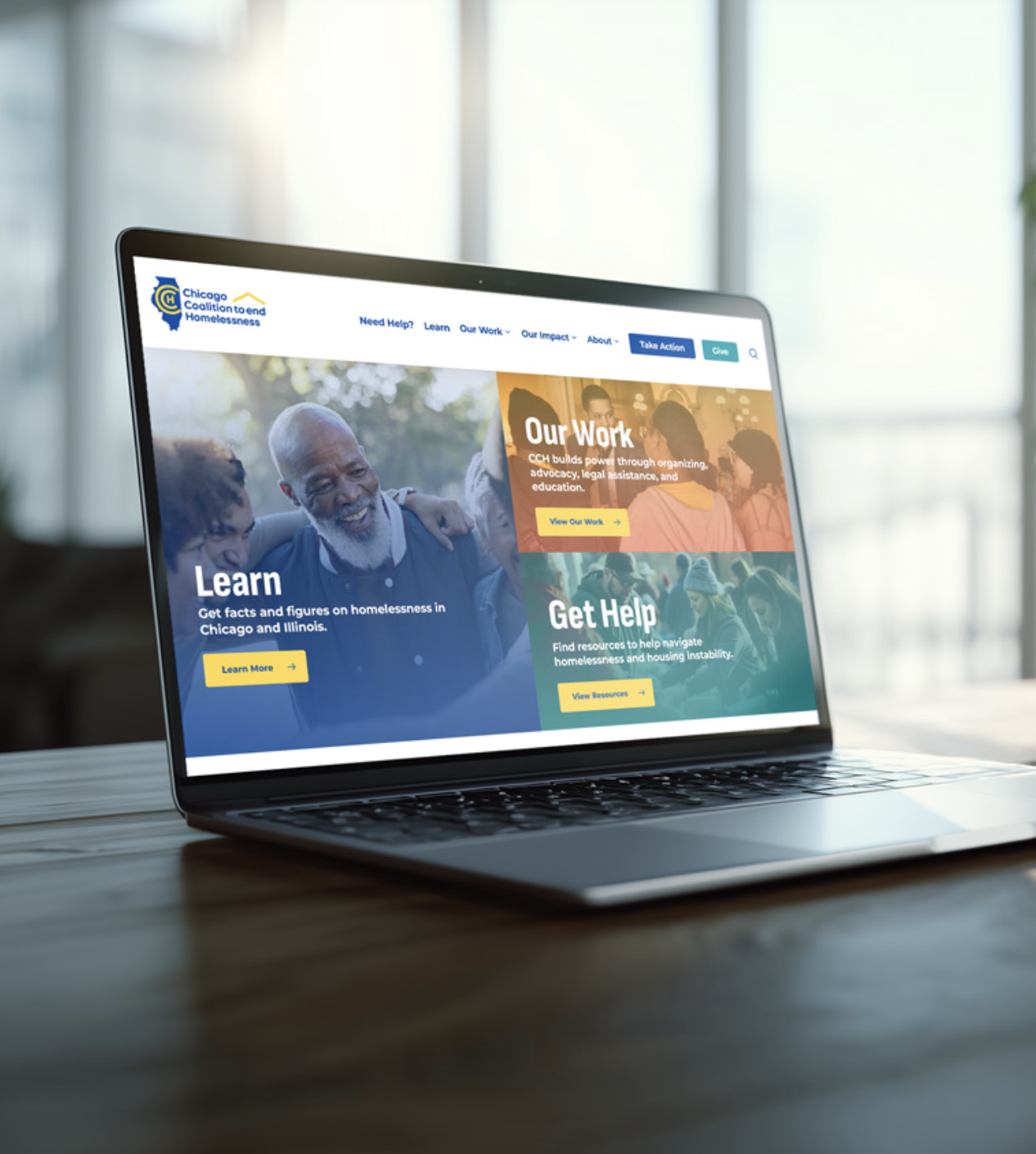
An overview.
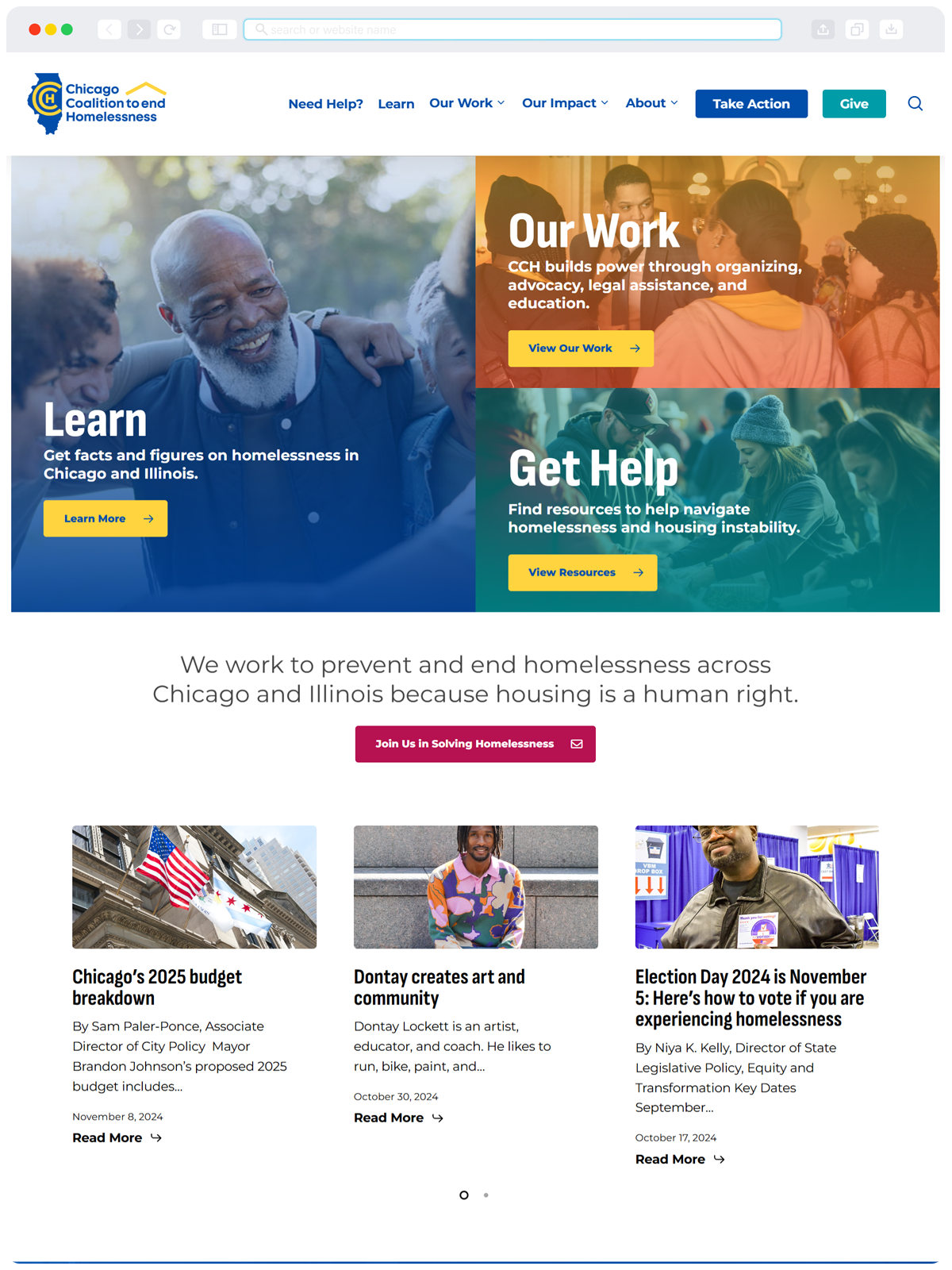
I led UX/UI design and project management, aligning stakeholders and guiding the project from discovery through delivery to create a clear, accessible, and human-centered website.
Chicago Coalition to End Homelessness (CCH) operates at the intersection of policy, community, and social justice. The challenge was not just redesigning a website, but translating complex, systemic work into a clear, usable, and emotionally resonant experience.
My leadership & approach.
I owned the project from discovery through delivery by aligning stakeholders, defining strategy, and ensuring execution stayed grounded in both user needs and organizational mission.
-

Strategic Alignment
Facilitated stakeholder workshops to distill priorities into a unified digital vision.
-

Experience Architecture
Reframed information architecture to simplify access to dense, policy-driven content.
-

UX/UI Design
Led the design of a system that balances clarity, accessibility, and human-centered storytelling.
-

Operational Leadership
Managed cross-functional teams, timelines, and decision-making across the project lifecycle.
My execution & impact.

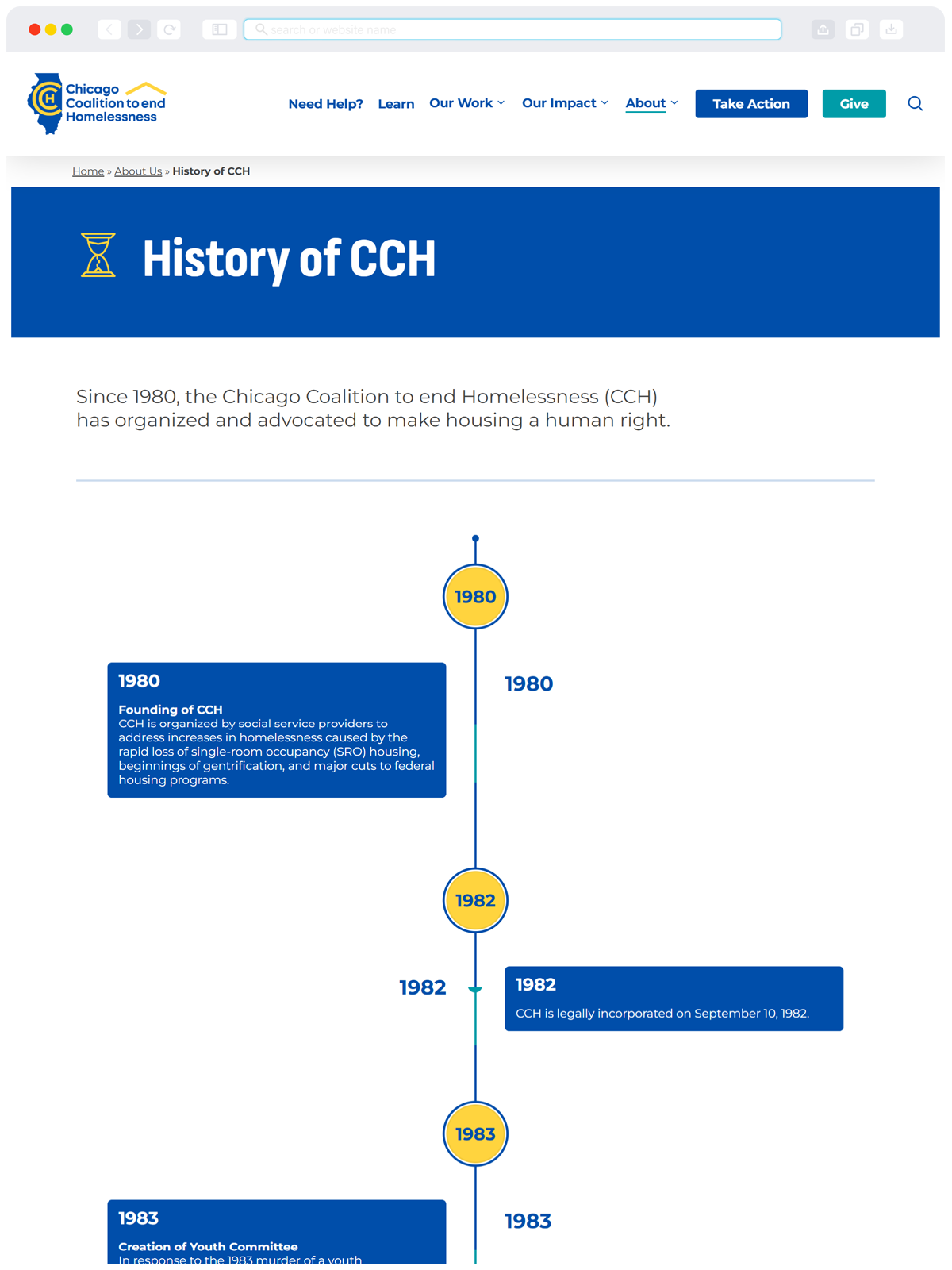
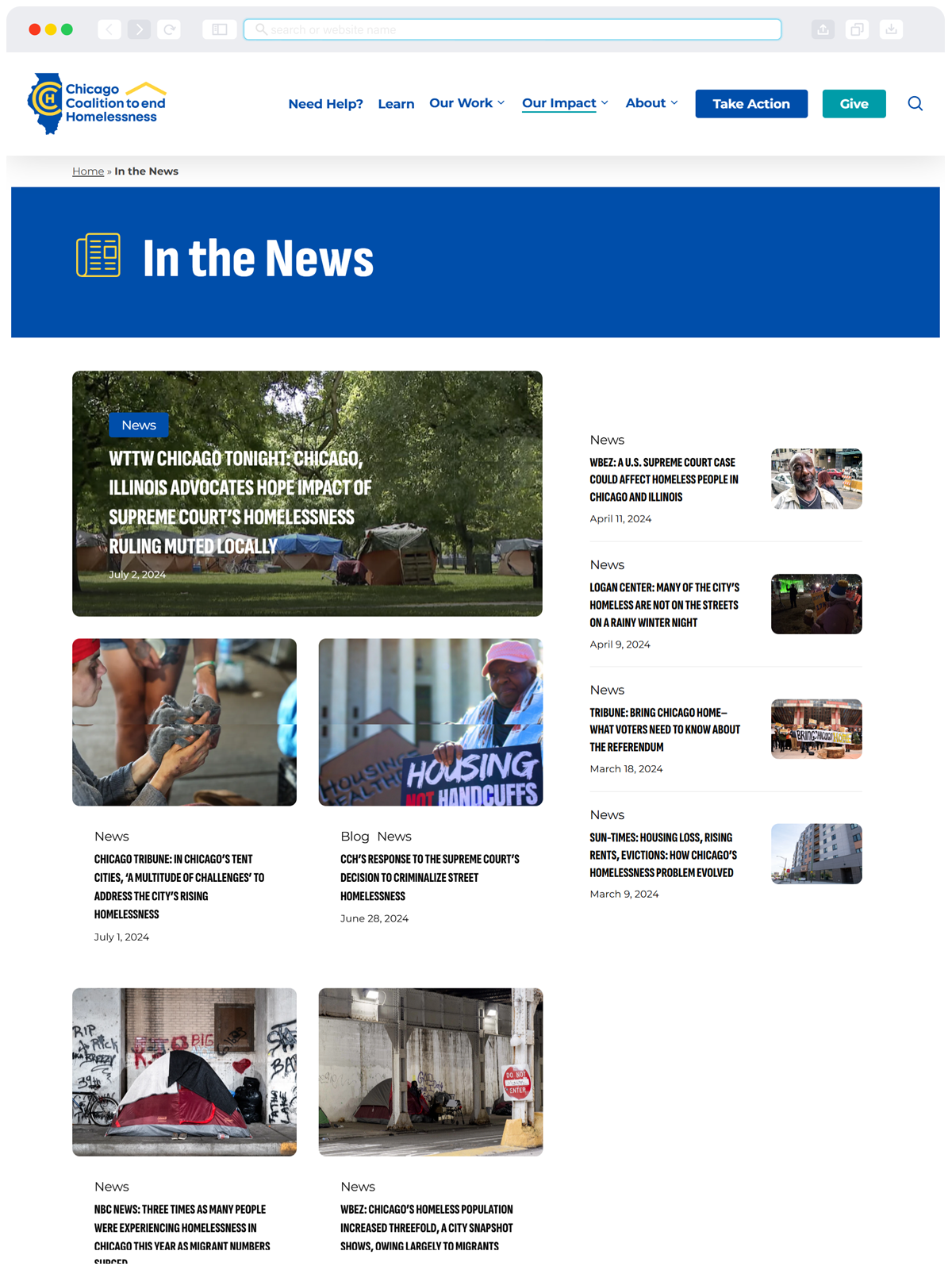
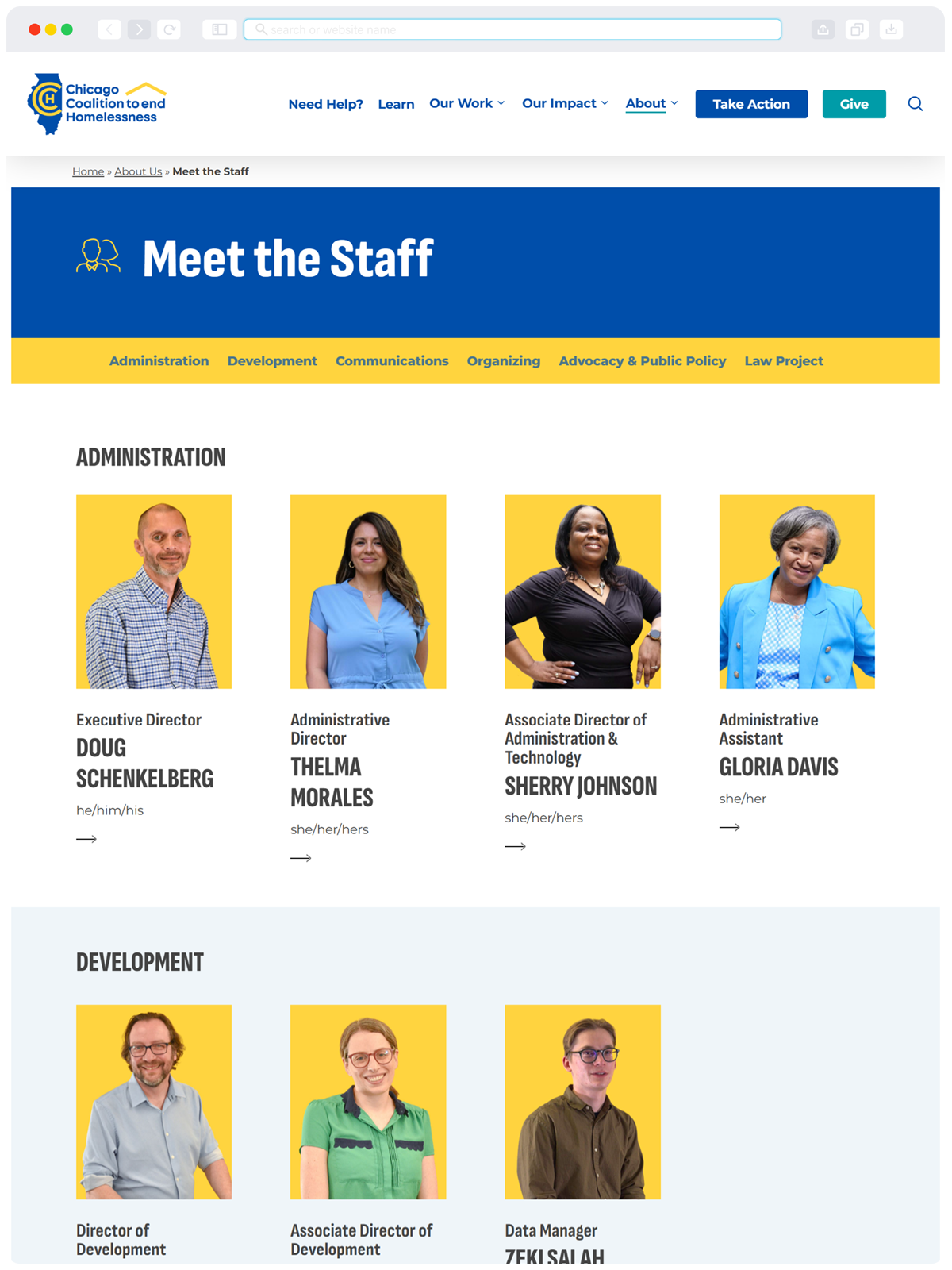
From structure to interface, the work focused on bringing clarity, cohesion, and accessibility to a complex body of content, ensuring the experience could both inform and drive meaningful engagement.
Restructured content and reimagined navigation to create intuitive, user-centered pathways
Designed and implemented a cohesive UX/UI system that reinforces clarity and consistency across the experience
Partnered closely across design and development to deliver a seamless, unified digital platform
Enhanced how users learn, engage, and take action through more accessible and thoughtfully organized content
Elevated the organization’s voice through a more cohesive, modern, and scalable digital presence

My perspective.
This work reinforced how much clarity and structure can shape not just an experience, but how people understand and engage with complex issues.
It also highlighted the responsibility that comes with designing in spaces like housing justice. UX is not only about making things usable, but about representing real experiences with care and creating pathways that help people learn, connect, and take action.